Home Blog Page 87

What is neo and How does neo work?

What is NEO?

NEO is an open-source decentralized blockchain platform. It was previously known as Antshare.

Who are the founders of NEO?

Neo was founded in the year 2014 by Da HongFei and Erik Zhang. It was renamed NEo in 2017. The creation of NEO was aimed at exploiting blockchain technology and using it in building smart economies and smart networks. Smart contracts are used in NEO to facilitate the transactions of digitized assets. It was previously coded as ANS and the code was changed to 

How does NEO work?

NEO is a highly specialized and high traffic handling compliant blockchain which can handle 10,000 transactions per second. It is based on the Byzantine fault-tolerant/ dBFT mechanism, which works on the fundamental “Proof of stake” principle. The Byzantine fault-tolerant works on the consensus mechanism between numerous individuals/nodes/ computers. The base asset of NEO tokens is non-divisible tokens called GAS tokens. These GAS tokens can be divisible up to the 0.00000001 level. 

These GAS tokens can be used for paying transaction fees. The rate of inflation of GAS tokens is controlled by a decaying half-life algorithm that looks after the inflation rate of GAS tokens. This algorithm generated 100 million GAS tokens in 22 years to counter inflation. A total of 50 million NEO tokens were offered in ICO / Initial Coin offering which is 4.5 million US dollars and other 50 million NEO tokens of the 100 total NEO tokens were retained with the company, every year a total of 15 million NEO tokens are used by the NEO tokens by unlocking them towards achieving the long term goals of the company.

 As NEO is an open-source coded platform, individual developers can contribute to the development or maintenance of NEO by using Smart contracts. NEO also makes the most out of the networks, oracles and decentralized storage.

NEO aims at exploiting blockchain technology in creating a much-awaited smart economy, where transparency and discrepancy-free transactions are completely assured. The smart contracts are given by individual users/developers coordinating between the nodes and decentralizing the entire processes of development, maintenance and enhancement of the NEO platform. The original/ precursor to NEO, the Antshares was founded in 2014, it was open-source code on Github. Then it was rebranded to NEO, as an idea of combining past and future. The name NEO was based on the Greek word Neo, which means new.

NEO 3.0 update

Neo 3.0 or N3 is an updated version of the original NEO. The new updated version deploys a highly modulated framework and thus the n3 or Neo 3.0 can handle a higher number of operations and transactions than the preliminary version or NEO. The updated version was developed by Erik Zhang in 2018.

How to use NEO?

According to the original website NEO.org, NEO has two main uses:

To cast a vote in choosing the council members of NEO.

To get GAS tokens that have utility in various segments.

 The NEO committee holds control over the blockchain and decentralized network of nodes. The committee members in turn have control over nodes scattered across the world. The committee members are elected by the NEO holders and the minimum unit to cast a vote to elect committee members is 1 NEO at least. The committee thus elected, holds power over certain services like maintaining the functionality of the blockchain and deciding on certain critical parameters which can potentially affect the functionality of the blockchain.

 GAS tokens can be used in redeeming the services of the NEO network. GAS tokens can be used for smart contracts, storage and maintenance of the integrity of nodes. For every block in the chain, 5 GAS tokens are minted, thus created GAS tokens could be used for availing NEO network services. The lowest unit of a GAS token is 0.00000001 GAS token and cannot be divided further. Most of the NEO wallets available in the market allow users to redeem the GAS tokens with the mere click of a button. But users must also be aware of the fact that some of the wallets distribute the tokens to NEO users proportionally.

What makes NEO unique?

Most of the blockchains available in today’s world are based on the omnipresent technology ETHEREUM or at least depend on EVM for proper functioning, NEO is a total disruptor in the Blockchain industry, completing the independence of blockchains on the ethereum platform.

The N3 version or the latest version of NEO proved that blockchains can even work in the absence of a supporting ETHEREUM framework and are not overly dependent on oracles for the sake of smooth operations. N3 ensures better governance, smart economies, interconnected nodes in the decentralized network and total transparency. With its path-breaking consensus mechanism,  NEO has transformed the way traditional blockchains used to work.

Multi-language programmable structure and original codebase have helped the programmers community across the world to develop the blockchain NEO very quickly, efficiently and securely. Decentralized storage, identity tools, data oracles, interoperability, and a domain name service are just some of the distinguishing features of NEO, which make it stand out from the heap of traditional blockchains.

In the fraternity of developers, it is commonly said that smart contracts are not that smart and interoperability is an issue to emphasize. To decrease the dependence on smart contracts for the efficient functionality of the blockchain and to facilitate all the programmers by breaking the barrier of coding language, NEO not just tried to get into a niche like any other blockchain but carved its way out of a mountain of obstacles to become one of the most secure, diverse, easy to use, easy to develop, diverse, efficient and unique blockchain in the FinTech world.

How many NEO coins are in circulation?

It is estimated that there are 70.5 million NEO tokens in circulation as of now, with the maximum supply being 100 million NEO tokens.

Conclusion 

NEO – An opportunity

 As millions of programmes spread across this vast world complain about the lack of infrastructure to contribute to the development of a decentralized and most secure blockchain, even though they are highly skilled, NEO became the ray of hope for them by enabling them to construct the tiny chunks to the code of the blockchain by any programming language and very little infrastructure.

This brought a change and forever transformed the way a blockchain can work. To read more articles about cryptocurrency, head to Postling blog.
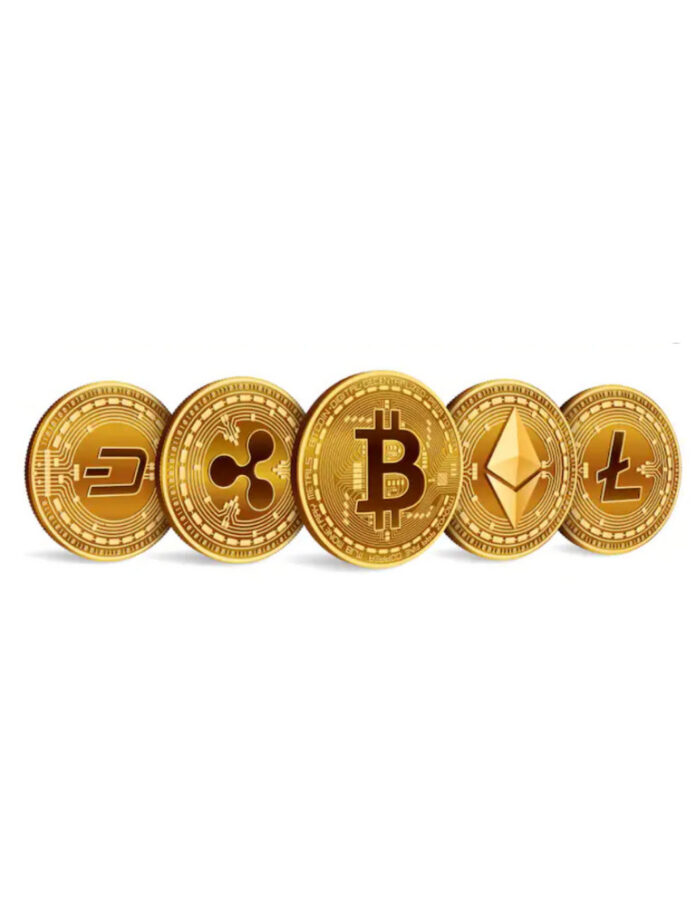

Top 5 cryptocurrency

Who does not want to get their money doubled or tripled or even more in a short period of time. In today’s world, the market capitalization of Bitcoin is more than the GDP of 80% of the countries on this planet. That’s the reason why investing in Bitcoins is the new trend but as we know, higher profits bring along higher risks.

Crypto currency is extremely volatile in nature which is why it can fetch huge returns rapidly; this also means that it can drop down in no time making one lose all their finances invested upon it. Moving forward, looking at the current scenarios one could play a safe game. Accordingly, there are few cryptos which standout on the top list which one can give a shot to invest upon. These crypto currencies are as follows: 

RIPPLE (XRP)

Bitcoin could take up to 1 hour to complete a transaction. To eradicate this delay in payment gateway, an alt coin was created that is named as ‘Ripple’ or ‘XRP’.

Ripple or XRP can confirm a transaction in a jaw-dropping time span of  up to 4 seconds! Ripple offers interoperability between different financial systems. This form of cross border payment platform supports the interventions of banks, though it contradicts the whole point of bitcoin which is to be independent of centralized financial institutions.

Ripple has collaborated with great banks like American Express and Bank Of America to use a platform to transfer currency world wide in a faster, cheaper and efficient way. This eventually led to the intent of creating it, which was to offer a considerably low fee with rapidly fast settlement of it’s transactions. 

ETHEREUM (ETHER)

Ethereum’ also known as ‘ETH’ or ‘Ether’ is an alt coin. Launched in 2015, it is based upon Ethereum platform’s blockchain technology. The makers of Ether had a major problem with the limitation of Bitcoin which affected it’s availability.

Hence to eradicate that issue Ethereum was created to guarantee an unlimited supply of coins. Ether is coded by a language called ‘Solidity’ which uses a smart contract to guarantee every transaction. Ethereum acts as a platform to provide decentralized applications/ programs. The network here runs by self-supporting individualistic computers, which are also referred to as ‘Nodes’. To maintain a sufficient & a stable outflow, every year 18 million new coins would be issued. Furthermore, the block creation time is as low as 25 seconds.

LITECOIN (LTC)

Litecoin or LTC is one of the top coins in the crypto market. It is a free to use open source project which was launched in 2011, it’s basic structure resembles to that of a Bitcoin with some minute yet important differences, which are:

  • Bitcoin’s supply was restricted to 21 million coins whereas Litecoin’s supply is 84 million coins.
  • The average block creation time of Bitcoin is 10 minutes while that of Litecoin is 2.5 minutes
  • More Decentralization and Non involvement of financial bodies, banks etc.
  • Low cost to mine ( low electricity consumption )

TETHER

These coins are issued by Tether Limited. Tether coins are generally considered as one of the most stable coins when compared to other alternate coins. This is because the intention behind it’s invention was to create a non-fluctuating, easy to analyze and that can be invested upon long term with a feeling of a tangible asset. This is possible because the value of this digital currency or 1 Tether is equivalent to 1USD.


Now one might think if it’s value is equivalent to a dollar then how would one gain profits out of it. Profits are gained in the form of interest, which are gained by just withholding/ locking up tether coins on currency exchange platforms, similar to that of a savings account. One such famous platform is “Celsius”, which yields 10% of Annual Percentage Yield. This rate is undoubtedly higher than what any usual financial institutes return. 

STELLAR LUMENS

Stellar is one digital currency who’s functionality is quite similar to that of XRP; which is a quick, dependable & non-expensive global transaction. Stellar lumens here attains its functionality by connecting a grid between financial institutes, common people and payment systems across the globe. Yet it distinct itself from XRP by it’s root purpose.

Stellar considers itself as the “Crypto of the people ” by issuing financial services to the common people across the globe. Meanwhile XRP depicts itself to be the “Banker’s Crypto”. The catch by Stellar is that it allows its users to transfer money from one person to another person from any point of the world to anywhere without even having a bank account. Primarily, it eradicates the hassle of transferring money conventionally which accompanies huge complications and hidden charges.


Experts assume that Stellar would grow easily around 600% in the upcoming years.

CONCLUSION

Now that we know about the 5 top crypto currencies, we can pick up the right choice for investment based upon our niche. Know about each cryptocurrency in detail here.

One should always remember the fact that crypto currency is highly volatile & volatile investments either fetch high returns or crash down in no time. Most of the bitcoins, digital currency is a bubble in it’s own which are formed by the cultural trends and historically observing, cultural trends tend to rise rapidly and reach its saturation rapidly.

From this breakeven point things tend to go worse for a long time, so it is extremely important to observe and analyze the growth cycle of the crypto we are investing in.

What is kusama and How does kusama work?

What is Kusama (KSM)?

Kusama is an experimental blockchain that is designed to deliver a huge interoperable and expandable framework for blockchain programmers.

Kusama Blockchain is built on Substrate. The substrate is a blockchain building platform created by Parity technologies. Kusama is widely popular as the advanced version of polkadot and the code for Kusama is KSM. Kusama is often referred to as the “ Canary Network” in the world of cryptocurrencies. Quick projects gain access to an interoperable network when deployed on Kusama, which feature is not available on the traditional Polkadot.

Developers across the world use Kusama as a testing ground to bring innovations and additions to the blockchain polkadot. If the changes seem to benefit Osama, then the changes/innovations will be deployed on Polkadot as well.

Even though Kusama is the testing ground, many developers end up deploying their developments on Kusama itself without actually taking them to the polka dot. Kusama offers very low to no barriers for developing para chains and low bond requirements for validation.

So that’s why Kusama is chosen by early-stage startups to test and experiment on it as much as they want. This is undoubtedly an added advantage of deploying code on Kusama.

Who are the founders of Kusama (KSM)?

The creators of Polkadot were the creators of Kusama as well. A company known as Parity technologies has built the advanced version of Polkadot, Kusama.

Founder of Parity technologies Dr Gavin Wood, who is a very popular computer scientist and developer across the scientific community, has played a key role in creating Kusama. Dr Gavin Wood has also co-founded Ethereum / ETH.

Along with the torchbearer, Parity Technologies has a well qualified and highly talented team. The team comprises more than 100 talented blockchain engineers who are spread across the world. They have played a crucial role in developing, enhancing and maintaining the Kusama blockchain. Kusama also gets grants from the Web3 foundation. The Web3 foundation also provides Kusama with research and resources and helps the Kusama team to grow.

How does Kusama (KSM) Work?

Blockchain creation involved in the Kusama network is as follows.

Relay Chain

Para-chains

Relay chain

 This is the main Kusama Blockchain, this network is where transactions are finalized. To increase the speed of the transactions, the relay chain separates the latest transactions from the transactions which are to be validated.

The relay chain uses a nominated Proof-of-stake (NPS) type of consensus mechanism to ensure secured transactions. The relay chain is meant for two types of users, both validators and nominators. Validators validate the para-chains and make the blockchain secure, whereas nominators elect trustworthy validators to secure the chain.

People who have a stake in KSM are eligible for validating and nominating and also collecting the inflation rewards.

Para chains

 Para chains are subsidiary blockchains that check the validity of the transactions. Kusama governance involves three types of users including the referendum chamber, the council and the technical committee. 

Referendum chamber

 Any KSM staker can propose/oppose the major changes in the network.

The council

 Council is elected by KSM stakeholders to propose and approve the changes made to the software. The council contains 7 positions.

Technical Committee

 The teams which actively participate in the development and are elected by council members to look after the Blockchain development and enhancement.

How to use Kusama (KSM) coins

  • Visit the claim tokens tab in Polkadot UI.
  • Choose your account and click continue
  • Visit the sign and verify section in message tab
  • Copy the message from sign ETH transaction tab and copy the below shown signature
  • Paste the message in Sign ETH transaction box, if you have a valid claim on DOT, your address will be shown on KSM as well in Polkadot UI

Security of Kusama (KSM) Network

As mentioned earlier, Kusama is built using a nominate proof-of-stake ( NPS) consensus mechanism unlike the other blockchains in the market. The NPS consensus mechanism uses a network of KSM stakers/ nominators to elect nodes to participate in the validation of the transaction process. The nominators receive a portion of the inflation reward if at all their nominator is selected on the next bout of rotation. Dishonest validators will have their stake decommissioned. Kusama also uses a basic queuing method based on Merkle Trees. This queuing method can be used to resolve cross-chain transactions.

Where to buy Kusama / KSM

Kusama / KSM is currently available for credit or debit trading on numerous crypto exchanges. Some of the popular exchanges, where KSM can be traded are Binance, OKEx and Huobi Global. The most popular Kusama trade pairs are Kusama / USDT, KSM/BTC, KSM/ETH.

What makes Kusama (KSM) unique

Kusama is an unconventional blockchain platform that supports fast-paced projects and developers who want to create innovative solutions. Kusama is a multichain type of Blockchain and employs a heterogeneous shared design, which in turn uses a nominated Proof-of-stake (NPS) consensus system.

The NPS consensus system stands out from the rest of the consensus mechanisms as NPS because it is an alternative consensus mechanism to the energy-intensive proof-of-work ( POW), which is currently used by most of the blockchains in the industry. NPS enables Kusama to provide rapid on-chain upgrades and to support cross-chain message conveyance ( XCMP), enabling communication across the para-chains on the Kusama network.

Like Polkadot, Kusama also employs on-chain governance capabilities. The on-chain governance is highly decentralized, enabling anybody with Kusama tokens or para chain tokens to participate and make decisions in governance. An estimate proves that on-chain governance in Kusama is almost four times faster than that on Polkadot. Kusama also ensures maximum coordination and cohesion between the peers on the network.

How many Kusama coins (KSM) are in circulation

Kusama/ KSM network has a total circulating supply of 8.47 million tokens and a total stock of 10 Million KSM  tokens by the end of 2020. While other blockchains in the industry have somewhat fixed the supply of their tokens, Kusama hasn’t fixed supply and the supply of KSM tokens increases at a 10% inflation rate every year.

Inflation induced tokens are rewarded to the validators and 50 per cent of the total supply of tokens are rewarded to stakeholders. If the 50% rule is not satisfied, some of the inflation-induced tokens are also rewarded to stakeholders until the 50% rule is met. Kusama hasn’t undergone redenomination to get its supply increased, unlike Polkadot.

Initially, Kusama tokens were awarded to Polkadot / DOT buyers as an airdrop in a 1: 1 ratio. The corresponding Kusama values of Fractional DOT sales are decommissioned.

Conclusion 

Kusama (KSM), as the productive testnet today, holds a unique place in the market. Kusama is positioned to be a market leader for dApp production and blockchain development with its forward-thinking design. It is also likely to remain one of the most active and useful investments for many years to come.

Want to know about Monero? Head to Postling blog.

What is chainlink and How does chainlink work?

What is Chainlink? 

Chainlink is the decentralized oracle network based on the Ethereum platform, it plays a very important role in the implementation of blockchain technology in the physical world. It is a link between the blockchain and the real-world factors that influence the function of the blockchain.

Such external forces which influence the blockchain are called “off-chain” forces. These off-chain forces are very diverse, magnanimous in magnitude and too bulky to deal with them manually.

These off-chain forces could be the values of Fiat currencies, market forces, Political happenings, weather, sports and even something as simple as a news headline.

The “Butterfly Effect” of these inconspicuous external forces could create a huge impact on the blockchain. So such factors and the magnitude of their impact on Blockchain should be carefully assessed with the help of a decentralized oracle network and that is Chainlink. LINK cryptocurrency also works based on Chain LInk and LINK coins are used for making smart contracts via Chainlink.

Who are the founders of Chainlink?

ChainLink was founded by Sergey Nazarov and Steve Ellis in September of 2014 with the parent company being the Smartcontract.

How does Chainlink work? 

Chainlink provides input to chunks of programmes known as Smart contracts. The smart contracts subsequently help Blockchain to work on a very wide range of inputs and thus help the blockchain to calculate the cumulative impact of all the off-chain links on the blockchain and give out the most accurate output.

A smart contract can be also regarded as a blockchain-backed digital agreement between two parties, such that the transaction or operation gets completed, only when all the conditions of that smart contract are fulfilled.

For example, if Sam wants to buy the car of John for 0.5 Bitcoin, smart contracts make sure that only when Sam pays 0.5 Bitcoin to John, ownership of the car gets transferred from John to Sam. As there are no third parties involved and the transaction happens only when all the conditions are met, smart contracts help in maintaining fairness and transparency in 100% of transactions made via them.

How to use Chainlink?

Steps in the functioning of Chainlin

Oracle selection

Chain Link users draft a Service Level Agreement (SLA), which is a set of all the data requirements for a specific transaction/agreement. The SLA then matches the user with a specific database that can provide the required data. Then the chain accepts payments from users in the form of LINK and puts the payments into bids matching the requirements of the order.

Data Reporting  

This is the step where oracles connect with the external sources and receive real-world information from them, which is required in SLA. The oracles process this data and send it back to the smart contracts to finish the transactions.

Result Aggregation 

The last step of the process involves oracles tallying the results and returning them to contracts.

Architecture Of The Chainlink 

Chainlink blockchain constitutes three types of smart contracts. 

Aggregating Contracts

collect data from oracles and match them with appropriate smart contracts, so that all the needs of the smart contracts are fulfilled. 

Order Matching Contracts

This step matches the smart contracts with bids of various oracles.

Reputation Contracts

Checks the authenticity of an oracle by observing its track record.

The nodes associated with chainlinks have two components:

Chainlink Core: Chainlink core is responsible for reading the newly created contracts and redirecting them to the chain link adapter.

Chainlink Adapter: it acts as a bridge between nodes and external data.

Smart contracts are not just confined to financial transactions, they are also used in securing legal contracts & agreements, Credits authorization, legal processes, signing contracts, insurance and other public services as well. The fail-safe working of these smart contracts can be exploited by all the industries on Earth to ensure safety, accuracy, transparency and authenticity.

Similarly, smart contracts have completely transformed the way of information exchange in the Health care sector. Now with the help of smart contracts, patients can control third parties from accessing their personal medical history, unless they agree to data revelation and get paid for the same. Smart contracts can also be used in the business management sector, for automating payrolls.

Automating payrolls will save lots of time and human resources for businesses. The most important use of smart contracts is their assistance in ICO / Initial coin offering, where new cryptocurrencies enter the market by opening public buying and therefore public intervention. ICO is a crowdfunding platform used to pool coin buyers and facilitate their buying activity. For example, let’s assume you are creating a new crypto token called XYZ and you need 10 Million dollars.

Let’s say 10 Million USD is equal to 10,000 ETHER and 1 XYZ token = 0.1 ETHER, then you will issue 100,000 XYZ tokens to raise the required 10,000 ETHER. Now a smart contract can be made to protect the sellers, buyers and transactions, such that, if 0.1 ether is paid by the buyer to the company, then the company issues 1 XYZ token to the buyer. These are just some of the applications of smart contracts which have a much higher significance in the functioning of Chain Link. 

How are smart contracts created?

Smart contracts are created on multiple blockchain platforms, for example, NEO and Ethereum. Smart contracts are formed using Ethereum’s original coding language called 

“Solidity”.

What makes Chainlink unique?

The key feature that made Chainlink different is, for Chainlink to obtain the requested data it makes use of different nodes that return the data to the smart contract upon forming a consensus. Not depending entirely on a single oracle and possessing nodes that can handle the task of data retrieval a single time as well as multiple times with the same ease made Chainlink stood out. 

How many Chainlink coins are in circulation?

It is estimated that there are 419,009,556 LINK tokens in circulation currently, with a maximum supply being 1,000,000,000 LINK tokens.

Conclusion

The technology associated with Chainlink has proven to be one of the significant pillars of the Defi and crypto ecosystem. Chainlink, as a well thought out network, doesn’t have a competitor yet, that comes close to the functionality offered by it.  

To know more about various cryptocurrencies, refer to Postling blog.

What is binance coin and How does binance coin work?

What is a Binance Coin (BNB)?

Binance coin is a cryptocurrency issued by Binance crypto exchange Binance is the world’s largest cryptocurrency exchange platform which was started in 2017 and is domiciled in the Cayman Islands.

Who are the founders of Binance Coin (BNB)?

Changpeng Zhao is the founder as well as the CEO of Binance.

Binance coin was firstly based on the Ethereum platform, but due to the rapid expansion of the Binance crypto exchange, it was later based on the Binance blockchain. Binance coin is coded as BNB and was started in 2017.

Binance was originally designed aiming at discounted fee trading, but due to the overwhelming response from the crypto community, it was later universalized to support payments for travel booking, purchases, online services and entertainment purposes.

With a market cap of 56 billion US dollars, the most popular crypto lies just behind Bitcoin, Ethereum and USD Tether in market cap. Due to the dedicated Binance blockchain supporting the Binance coin, it has gained insane popularity among the crypto peers in almost no time

An interesting fact is that the creators of Binance coin ( creators of Binance Crypto exchange themselves) burn/ destroy 1/5ths of their profits every quarter to control the market circulation of the Binance coin.

Binance Initial Coin Offering/ ICO was held in July 2017 with a rigid cap of 200 Million coins in circulation. 10% or 20 million coins were offered to Angel investors, who have invested in the project in the initial stages. Binance offered 40% of the total volume of 80 million binance coins to the founding team of the Binance coin. The major share, which amounts to 50% of the total coin volume/100 million coins were offered in the initial coin offering/ICO for various customers.

The Burning move of Binance coin founders proved successful in containing the supply of coins, thus, subsequently increasing the worth of the coins. Burning 1/5ths of total coins held in the treasury every quarter has been performed by the exchange a total of  15 times till now, gradually decreasing the count of coins in worldwide circulation. The 15th burning activity of the Binance coin is deemed as by far the largest in the US crypto market, destroying a total of 1,099,888 BNB or $595,314,380 worth of coins. Thus the current value of 169,432,937 has decreased from the previous value of 170,532,825 in the 15th burning event.

How does Binance Coin (BNB) work?

Binance with 1.4 million transactions handled per second is by far the world’s largest cryptocurrency exchange. It is traded with a symbol of BNB. Having been built on the Ethereum blockchain, BNB runs on the ERC20 tokens which are limited to 200 million BNB tokens. Read the article about complete Binance review.

How to use Binance coin/BNB:

One of the most popular cryptocurrencies in the world has numerous uses in the business world, even though it was created to facilitate transaction fee payment in the Binance exchange and as a utility token, its unprecedented rise in a global cryptocurrency has expanded the range of uses of the coin. They are:

  • Binance Coin can be used for paying for online services.
  • Used for paying transaction fees on various platforms.
  • It can be used for entertainment purposes, such as gifting, Virtual gift cards, vouchers, coupons.
  • Binance coins can be used to purchase coins offered through ICO by the Binance launchpad programme
  • Asian streaming service provider UpLive has collaborated with Binance and they are now accepting payments in the form of Binance coins for their services and products.
  • Various investment platforms like Moeda are accepting Binance coins as a form of payment.
  • Binance coins can be also used in loan repayment by the borrowers.
  • Binance coin is also accepted by many platforms like Visa card of Monaco for transactions, all thanks to the rapid popularity gain of the BNB.

Binance Smart Chain

Binance smart chain is a cutting edge blockchain designed by Binance exchange to support the insane number of transactions of Binance coins every day. As of the last week of June 2021, binance smart chains recorded an all-time high in terms of daily crypto transactions, which is a staggering 3.7 million transactions per day, which is higher than any of the ethereum’s all-time highs, but it still lags behind the all-time high of Binance daily transactions which is 12 million transactions, recorded on 14th May 2021.

Is Binance banned in the US?

According to Bloomberg, the United States legislature has ordered authorities to investigate Binance as the government senses some kind of discrepancies with the taxes paid by the Binance. As the company is domiciled in the Cayman Islands, the US government has little to no impact on the operations and existence of Binance coin, but, the spokesperson of Binance has commented that their company takes Taxes and federal regulations very seriously.

What makes Binance Coin (BNB) Unique?

With a market capitalization of 56 billion dollars, Binance coin has become one of the stable, high valued, low risky cryptocurrencies attracting every crypto enthusiast out there. Ease of operating, stability, guaranteed growth and wide range of acceptance is helping Binance coin to compete with its counterparts like Bitcoin, Etehreum, USDtether.

How many Binance coins are in circulation?

It is estimated that there are 153,432,897 BNB Coins in circulation currently, with a maximum being 170,532,785.

Conclusion

What started as a utility token has surprisingly become the world’s 4th best cryptocurrency ( In terms of Market capitalization).

Thanks to the rising popularity of digital currencies among people across the world, the wave has contributed to the growth of the volume of many cryptocurrencies and subsequently bitcoins.

With blockchain technology bringing an earth-shattering disruption in every industry known to mankind out there, cryptocurrencies have soared high in popularity, Market capital, the total volume of various coins. Payments, trading, lending, borrowing, investing, buying, selling were never the same as before, with the latest advancements of Financial technology.

And the scammer-free structure of the blockchain is promising maximum transparency to the users and even encouraging them to transact with cryptocurrencies.

At this point in history, cryptocurrencies have become an inextricable link in global operations, fuelling humanity stealthily. Binance coin has undoubtedly taken advantage of the blockchain and people’s increasing inclination towards adopting cryptocurrencies for financial transactions.

BNB has a very humble beginning, great going and a very promising future for all the enthusiasts and traders. Along with the BNB, there are many other cryptocurrencies listed in the Binance exchange which are of high significance in the crypto ecosystem and the Finance world.